
Regulated cargo / 04
Special articles
Items used directly or indirectly in treating, assessing or preventing human disease.
- 01
The health quarantine approval exists
Issued before the consignment moves. It cannot be obtained retrospectively.
- 02
A registered entity can declare
Most hospitals and laboratories hold no declaration account at all.
- 03
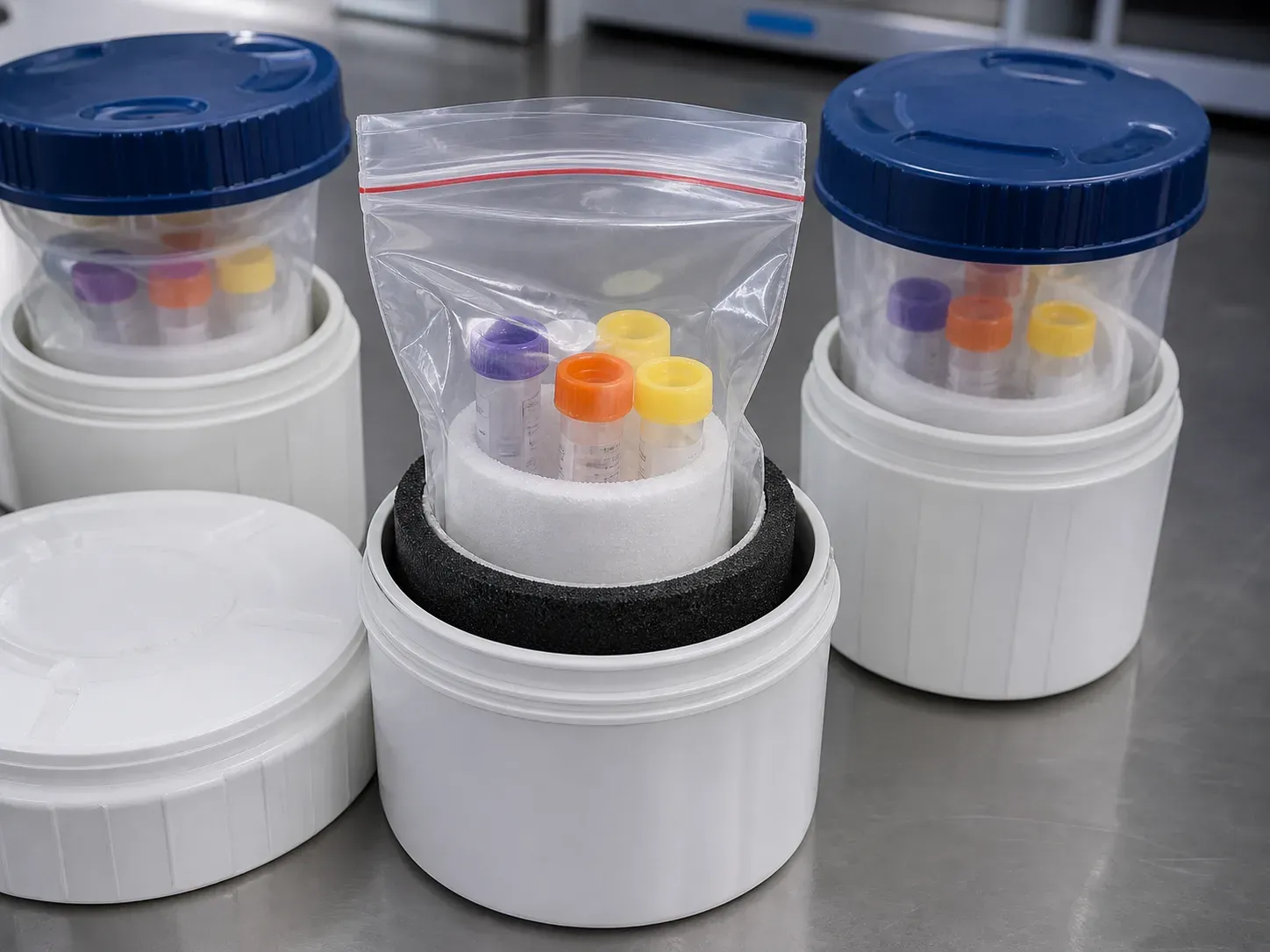
Packing matches the material
Infectious substance rules, dry ice or temperature control where required.
The route
How a consignment moves
- 01
Confirm it is a special article
Used directly or indirectly in treating, assessing or preventing human disease.
- 02
Establish the biosafety risk grade
Grade A is single-use and valid three months. Grade B runs six months and can be written off in instalments; grade C up to a year. The grade decides whether a phased delivery plan is possible at all.
- 03
Check the laboratory against the material
Containment has to match the risk grade, and BSL-3 and above must hold national accreditation. This is examined, not asserted.
- 04
File the approval
Before the goods move. There is no retrospective route.
- 05
Put credentials in place
Registration and E-Port credentials where the consignee has none.
- 06
For outbound, check the sending side
Foreign trade operator registration before samples are collected.
- 07
Pack to the transport rules
Dry ice or temperature control where the material requires it.
- 08
Declare, inspect, deliver
Against the receiving laboratory’s schedule, not the freight schedule.
What we do
We file the approval and make the declaration ourselves, in both directions — inbound diagnostic and therapeutic materials, and outbound samples going to central laboratories abroad. Where a consignee holds no registration, we put the necessary credentials in place as part of the job.
Discuss a shipmentWhat you need
Documents
- Special articles health quarantine approval
- Registration of the declaring entity, and E-Port credentials
- Statement of nature, intended use and risk profile
- Sender and receiving laboratory details
- Infectious substance documentation and certified packaging
- Temperature or dry ice specification
- Laboratory biosafety credentials matching the risk grade
- Risk assessment report, for the grades that require one
- Imported drug registration certificate, for inbound human biological or blood products
- Human genetic resources approval, for outbound material
Where it goes wrong
The approval cannot come afterwards.
Where samples arrive without it, the position is difficult and sometimes cannot be recovered.
Delay and total loss are the same event.
Samples in this category lose their analytical value while they sit at a port.
Inexperienced filings come back.
And the delay falls on a patient or a study, not on freight cost.
Operating evidence
Questions
Can the approval be obtained while the goods are in transit?
No. The approval has to exist before the consignment moves. Where samples arrive without it, the position is difficult and sometimes cannot be recovered, which for this category can mean the material is lost rather than delayed.
The receiving hospital has no declaration account. Is that a problem?
It is the usual position for hospitals, laboratories and research institutes. We declare in our own name and put the necessary registration in place for the consignee where one is needed.
Can you handle samples leaving China as well as entering?
Yes. We file in both directions, including samples going to central laboratories abroad. Outbound consignments additionally need foreign trade operator registration on the sending side, which we arrange where the sender holds none.
Can one approval cover a series of shipments?
It depends on the risk grade. Grade A approvals are valid for three months and for a single use, so a phased programme needs an approval per tranche. Grade B runs six months and grade C up to a year, both with instalment write-offs. Establishing the grade early therefore decides whether a delivery schedule is workable, and it is worth doing before commercial commitments are made.
Our material has been inactivated. Does that change the requirements?
It can, but the claim has to be evidenced. Inactivation must use a reliable method with verification of the result, supported by a validation report, and the method should rest on a recognised standard or authoritative literature. Customs assesses the technical documentation together with the material’s original risk level and the final form and packaging — so packaging and labels that clearly state the material is inactivated or non-infectious are part of the evidence, not an afterthought.
Is there any follow-up obligation after delivery?
For high-risk inbound items annotated for follow-up supervision, yes: the using organisation reports to the destination customs office within thirty days of entry, and that office supervises on site. Material may not be moved, sold or used without permission, and use and sales records have to be kept and kept consistent. These obligations continue after the shipping file has closed, which is why they are the ones most often missed.
Further reading