
Regulated cargo / 03
Biological materials
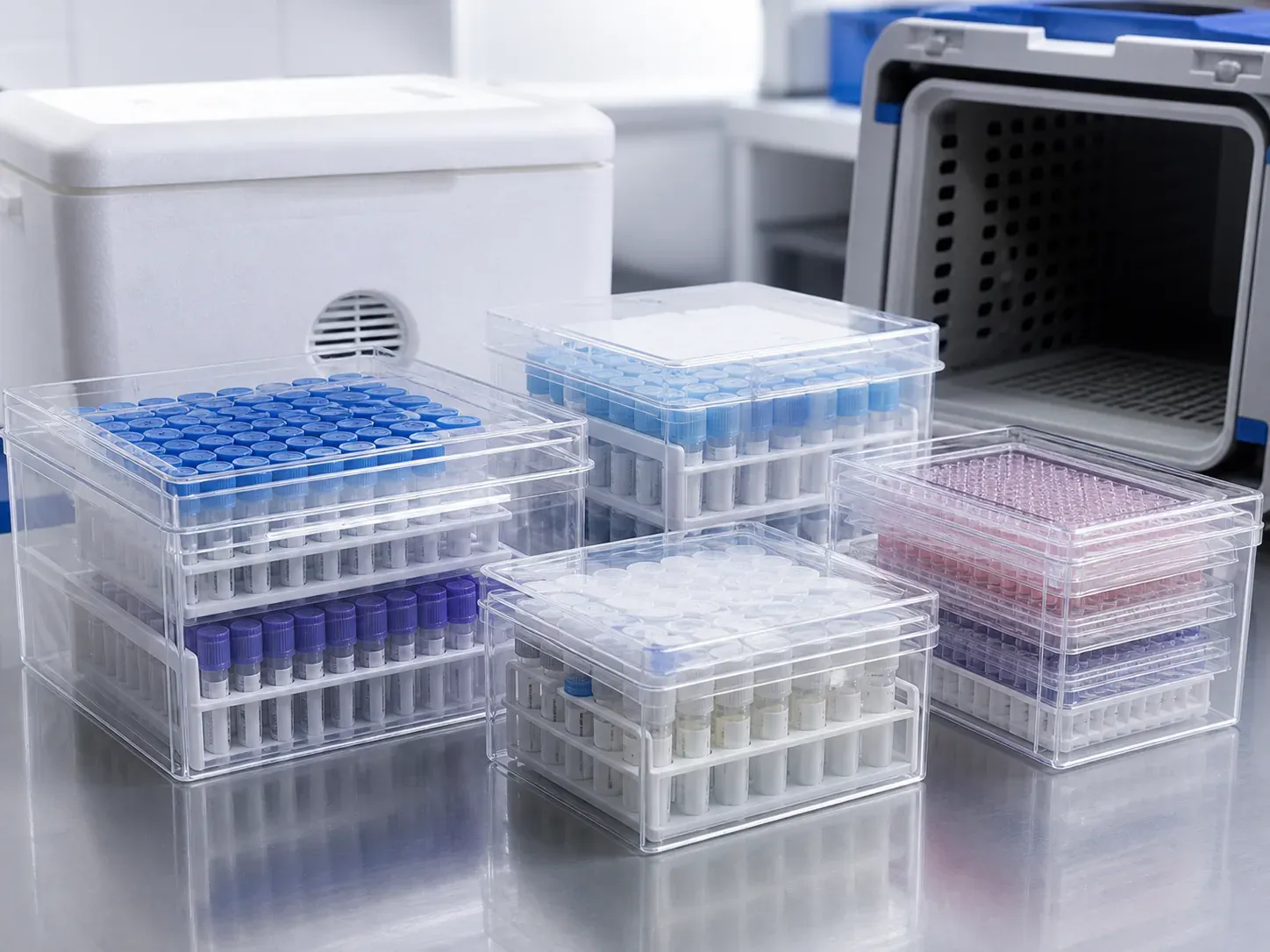
Live laboratory animals, tissue blocks and sections, cell lines, strains and research materials.
- 01
The quarantine permit exists
Obtained before the goods travel.
- 02
Someone is registered to declare
Universities, hospitals and institutes usually are not. That is the first task, not the last.
- 03
Containment and disposal are agreed
With the receiving facility, including holding conditions for live animals.
The route
How a consignment moves
- 01
Identify material and intended use
It decides whether this moves as a biological material or as a special article.
- 02
Establish the risk level
Four levels, each with its own requirements. Level 1 needs special quarantine approval, level 2 ordinary approval and a consignee filing, level 3 an official certificate, level 4 a manufacturer’s biosafety declaration.
- 03
Check the consignee’s registration
Research consignees rarely hold one. We obtain the baseline registrations.
- 04
File the entry quarantine permit
Before the goods travel. The stated entry date has to fall after the approval, not before it.
- 05
Agree containment and holding
With the receiving facility, disposal included.
- 06
Arrange inspections together
Port and destination, rather than one after the other.
- 07
Declare, accompany, hand over
We attend the inspection.
What we do
We file the quarantine approvals and declare in our own name, including for institutions that hold no registration of their own. For live consignments we sequence approval, transport and inspection against the condition of the animals rather than against the paperwork.
Discuss a shipmentWhat you need
Documents
- Entry quarantine permit
- Registration of the declaring entity
- Statement of nature, origin and intended use
- Containment and disposal plan
- Health and origin certificates for live animals
- Invoice, packing list, transport document
- Manufacturer’s biosafety declaration, for level 4 material
- Inactivation validation report, where the material is declared inactivated
- Designated isolation facility certificate, for laboratory animals
Where it goes wrong
The gap is usually on the receiving side.
It is a registration the consignee never needed before, and it is found late.
Two inspections in series outlast the cargo.
For live consignments, sequencing them together has to be arranged before arrival.
The wrong route is slow to undo.
Material that also meets the special articles definition follows a different approval path.
Operating evidence
Questions
Our institute has never imported before and holds no registration. Where does that leave us?
It is the normal starting position for a research consignee, not an obstacle. We obtain the baseline registrations that make an application possible, then file the quarantine permit and declare in our own name. One limit is worth raising early: the route works for material with a defined commercial identity, something that can be classified against the approval catalogue. A one-off preparation made to your own specification does not map onto that catalogue cleanly, so tell us at the outset if that is what you are sending.
What sets the schedule for live animals?
The condition of the animals, not the paperwork. We sequence approval, transport and inspection against how long the consignment can safely travel, and arrange the inspections in advance so they do not run consecutively.
Is our material a biological material or a special article?
It depends on what it is used for. Material used directly or indirectly in treating, assessing or preventing human disease follows the special articles route. We settle this before filing, because refiling under the other route costs weeks. The two regimes rest on different laws — health quarantine for special articles, animal and plant quarantine for biological materials — so they are not interchangeable.
We imported this material before. Do the same rules still apply?
Worth re-checking. The national announcement in force since 30 December 2025 moved several categories between risk levels, and the level decides the requirements. In-vivo animal diagnostic reagents and model fruit flies and nematodes moved up a level, culture media with non-infectious animal components moved down, and animal-derived gelatine for research is no longer treated as biological material at all.
How long are laboratory animals held in isolation?
Fourteen days in the general case, reduced from thirty. Research mice that do not meet health monitoring requirements remain at thirty. Where biosafety allows and the customs office covering the isolation facility approves, experimental work can begin during isolation, and the designated isolation facility certificate can now be obtained once and used repeatedly within its validity rather than per consignment.
Our cell line is well known by its abbreviation. Can we declare it that way?
No, and this returns applications. The product name has to identify the source animal species — Chinese hamster ovary cells, not CHO cells — and it must be a specific product rather than a category, so bovine serum albumin rather than protein.
Further reading
China’s biological materials regime: four risk levels, rewritten for the whole country in December 2025
What was a pilot in Beijing, Tianjin, Hebei and Shanghai is now national. Quarantine isolation for laboratory animals has dropped to fourteen days, and the level your material sits at decides everything else.
Prohibited entry goods can still be imported: China’s special quarantine approval
Soil, pathogens and material from disease-affected regions are prohibited from entering China. For research there is a route in, and since the December 2024 announcement its timetable is defined.