
Regulated cargo / 02
Biopharmaceuticals
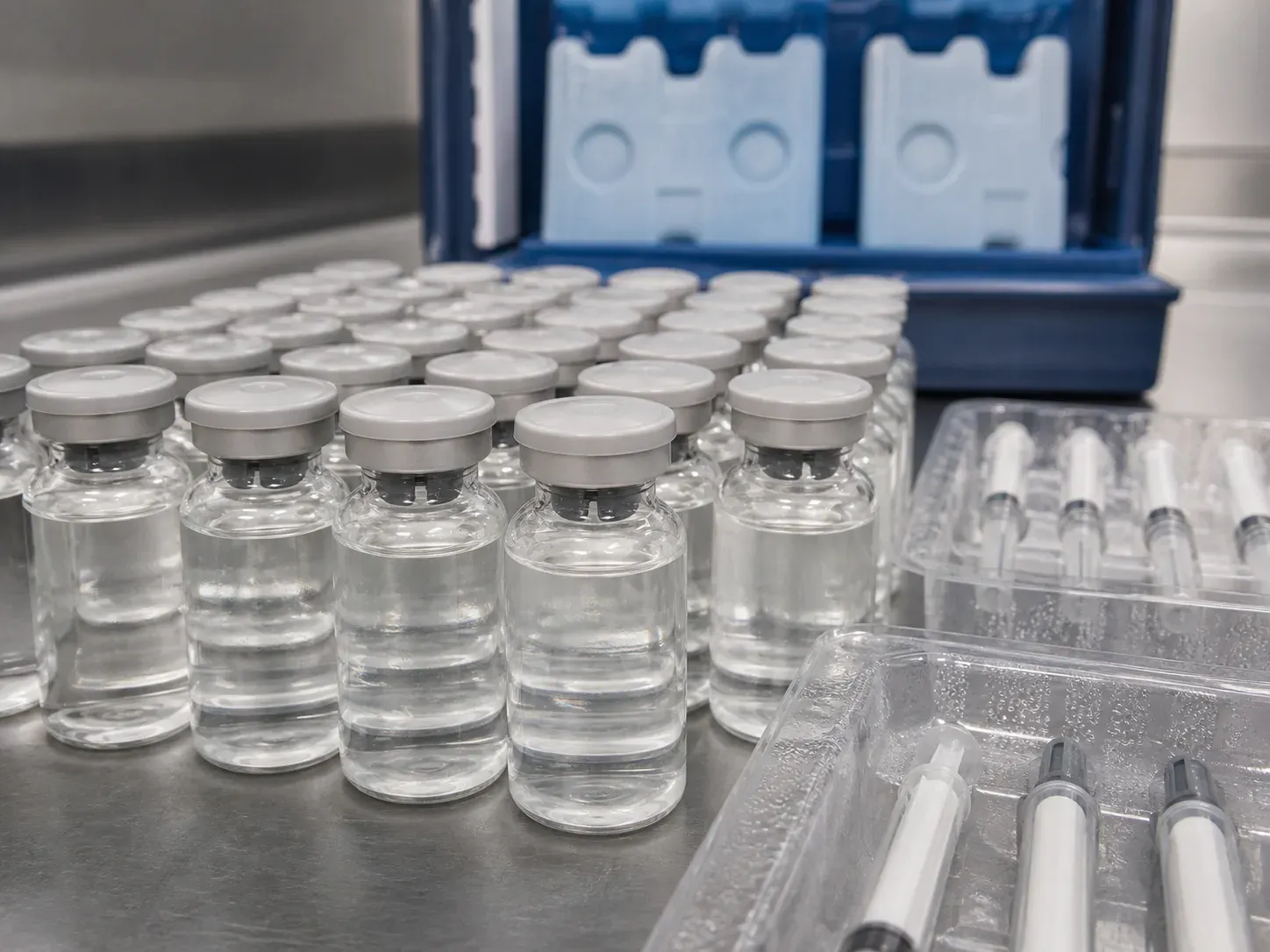
Medicines containing biologically active ingredients, under the tightest control of any category.
- 01
The route is settled first
Commercial supply, trial use, comparator and named-patient are documented differently.
- 02
The entity is permitted for that route
The licence attaches to the importer, not to the molecule.
- 03
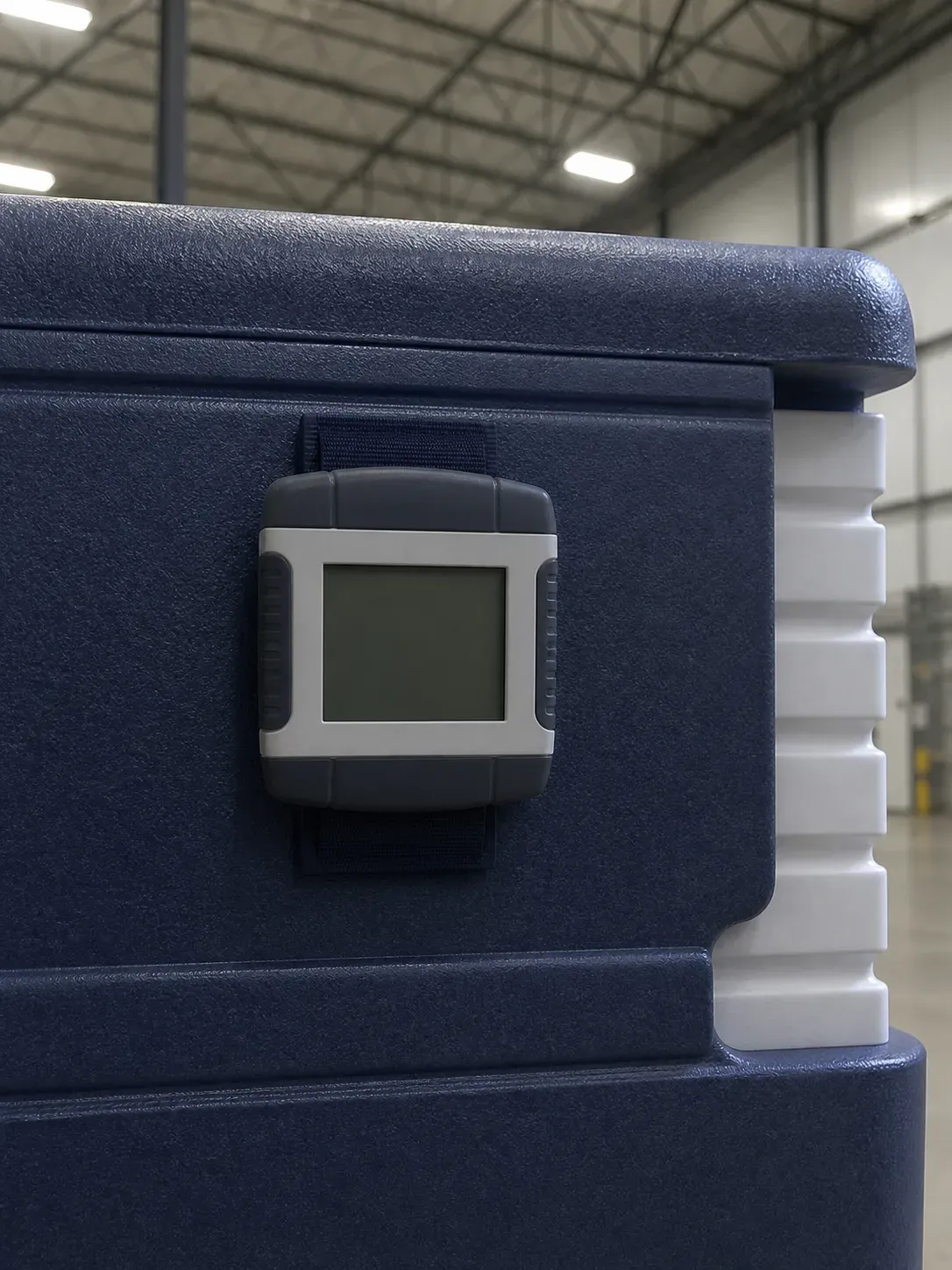
The cold chain is specified
Including how the record is captured and handed over.
The route
How a consignment moves
- 01
Establish the route
The stated purpose sets it. Purpose, not product.
- 02
Fix the port before the carrier
Medicines enter only at designated ports. Biological products are restricted to five cities, and a drug being sold in China for the first time to four. Export carries no such restriction.
- 03
Confirm the permitted entity
Where the consignee holds none, we arrange it before transport is booked.
- 04
Assemble product and provenance
Composition, manufacturer, batch, certificate of analysis, chain of custody.
- 05
Obtain the approval
Before booking. The timeline belongs to the reviewing authority, not to the freight schedule.
- 06
Move under continuous temperature control
The record travels with the goods.
- 07
Declare, inspect, release
Into storage that meets the conditions attached to the approval.
What we do
We assess which route a product falls under before anything is booked, arrange the licence required, and declare through the entity qualified for that route.
Discuss a shipmentWhat you need
Documents
- Import licence matched to the route
- Composition, manufacturer, batch, certificate of analysis
- Provenance and chain of custody
- Cold chain specification and temperature record
- Study documentation, where it supports a trial
- Invoice, packing list, air waybill
- Imported drug customs clearance note, matched line by line to the declaration
- Port filing for active pharmaceutical ingredients
- Narcotic or psychotropic permits, where the composition calls for them
Where it goes wrong
Purpose decides the route, not the product.
The same molecule follows different rules depending on what it is imported for.
The authority sets the timeline.
Booking transport before the approval exists is the most common way one of these shipments goes wrong.
A gap in the record is a gap in the product.
Cold chain evidence is examined, and it cannot be reconstructed afterwards.
Questions
The product is approved in our own market. Does that approval help in China?
It supports the file, but it does not travel on its own. The licence that matters attaches to the entity importing the product into China and to the purpose the product is being imported for.
We are shipping a comparator drug for a trial. Is that a commercial import?
No. The stated purpose determines the route, and a comparator sourced for a study is documented as study material. Declaring it as commercial supply, or the reverse, is the kind of error that is slow to correct once the consignment has moved.
Who holds the temperature record?
It travels with the consignment and is handed over at delivery. A gap in the record is treated as a gap in the product, so the recording method is agreed before departure rather than reconstructed afterwards.
Can we fly into whichever airport suits the schedule?
No. Medicines may only be imported through designated ports, and the list narrows by category: biological products to Beijing, Shanghai, Guangzhou, Chongqing and Chengdu, and any drug being sold in China for the first time to Beijing, Shanghai, Guangzhou and Chongqing. Other medicines have a wider but still fixed list. This decides the routing and the inland leg before a carrier is chosen. Exporting medicines from China carries no equivalent port restriction.
We import the API under processing trade. Do the usual formalities apply?
Where both ends of the processing trade are outside China, imported APIs and medicinal materials are exempt from import filing and port testing. The condition is absolute: neither the imported material nor the product made from it may be diverted to the domestic market. Where export genuinely becomes impossible, the goods are handed to the local drug regulator for disposal rather than sold locally.
The substance is used both as a food and as a medicine. Which regime applies?
Since 3 December 2025 a pilot applies classified supervision to thirty such substances, clove and liquorice among them, and the declared use decides the documentation. Imported for a non-medicinal purpose, no imported drug clearance note is required. In exchange the importer undertakes not to change the use and not to sell to anyone who will use the goods for another purpose — an obligation that continues after delivery and sits with the importer.
Further reading