
Regulated cargo / 09
Animal & plant products
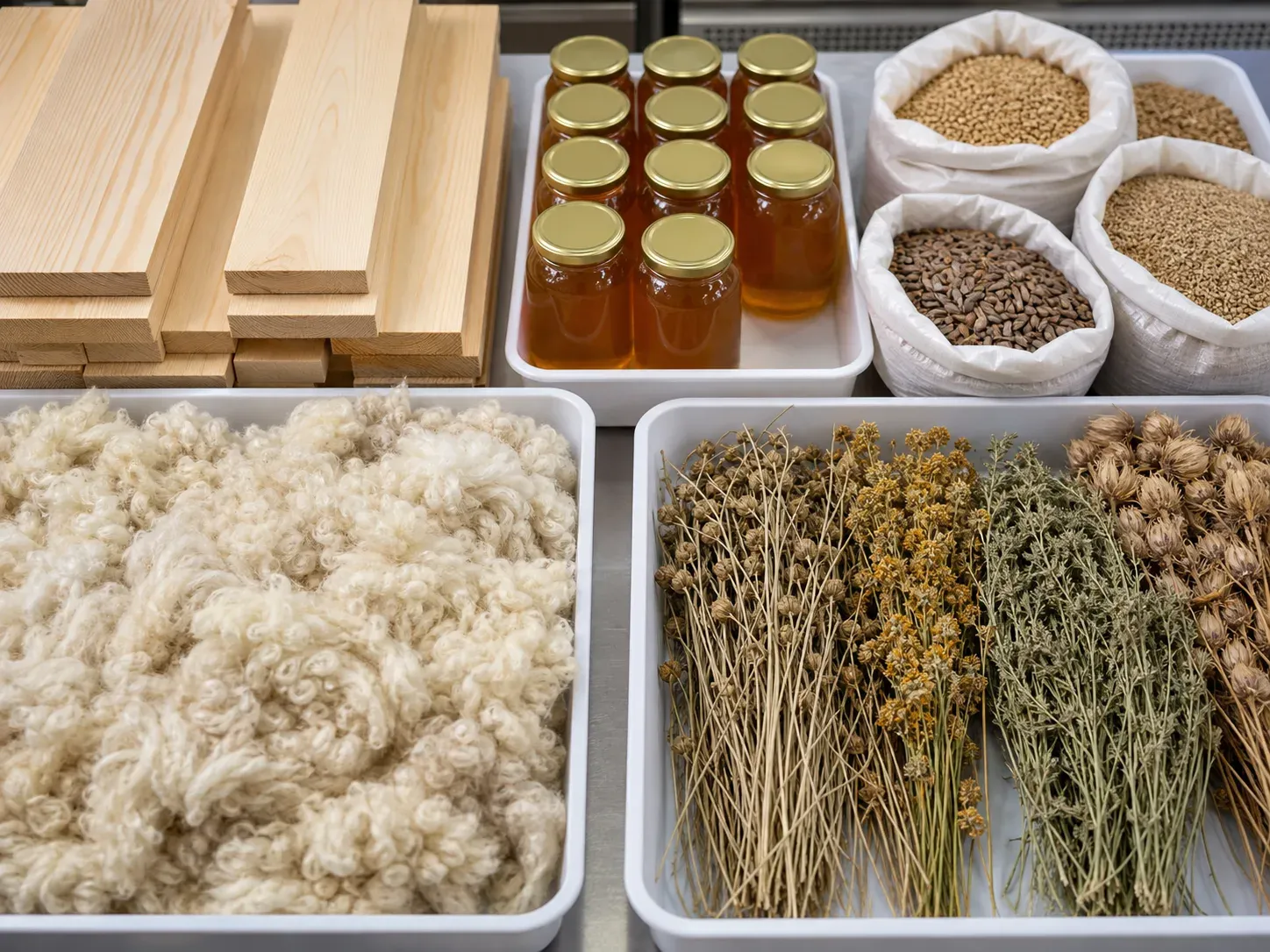
Edible and non-edible, under different requirements — including materials prohibited from entry except by special approval.
- 01
The quarantine permit exists
Obtained before the goods travel.
- 02
Prohibited material has a special approval
Reviewed at both district and General Administration level.
- 03
The overseas facility is approved
Where the product type requires it.
The route
How a consignment moves
- 01
Establish edible, non-edible or prohibited
Three routes, documented differently.
- 02
Check the species against the endangered lists
A separate regime from quarantine, with its own permits. It applies wherever any component derives from a listed species, including where the commodity code carries no supervision condition.
- 03
Obtain the quarantine permit
For ordinary consignments, before the goods travel.
- 04
Prepare the special approval
For prohibited material, for a defined purpose such as scientific research.
- 05
Check the consignee’s registration
Research institutes rarely hold one. We obtain the baseline registrations.
- 06
Secure origin certification
Phytosanitary or veterinary, plus facility approval where required.
- 07
Declare, inspect, observe conditions
Isolation or treatment conditions attached to the approval.
- 08
For outbound germplasm, permit first
Agricultural export permit, phytosanitary certificate, exporting registration.
What we do
We file quarantine permits and special approvals in both directions, including the special approval route for materials otherwise prohibited from entry, and we obtain the baseline registrations an institution needs before it can apply at all.
Discuss a shipmentWhat you need
Documents
- Entry animal and plant quarantine permit
- Special approval, where entry is otherwise prohibited
- Phytosanitary or veterinary certificate
- Overseas facility registration
- Intended use, containment and disposal statement
- Agricultural export permit, for outbound germplasm
- Invoice, packing list, transport document
- CITES or wildlife permit, or species certificate, where a listed species is involved
- Ecological and biosecurity risk self-assessment, for special approval
- Provincial or ministerial approval, or research project approval, for prohibited material
Where it goes wrong
Prohibited does not always mean impossible.
Some material moves only under special approval, for a defined purpose. Treating it as ordinary loses the shipment.
A query at either level restarts the clock.
Two levels of review, each with its own documentary standard.
For seed, a delay costs a season.
Not a delivery window.
Operating evidence
Questions
We have been told our material cannot enter China at all. Is that final?
Not necessarily. Some materials are prohibited from ordinary entry but can move under a special approval granted for a defined purpose, such as scientific research. We have imported soil samples for university research on that route, with review at both the local customs district and General Administration level.
How does the two-level review affect timing?
Each level applies its own documentary standard, and a query at either level restarts the clock. The practical consequence is that the file has to be right the first time, which is where most of the work sits.
We need to send seed or germplasm out of China. Is that the same process in reverse?
No. Outbound germplasm is controlled as a genetic resource and needs its own approval from the agricultural authorities, alongside a phytosanitary certificate and exporting registration. For seed, a delay costs a growing season rather than a delivery window.
Our commodity code carries no endangered species supervision condition. Does that settle it?
No. The supervision condition on the heading is a first filter, not the scope of the regime. Where any component derives from a listed species, a permit is required even though the code shows no condition — a wooden article whose description says nothing about its timber is the standard example. Components are checked against the CITES appendices and the two national protected species lists by Latin name, not by common name.
Our material is farmed or artificially propagated. Is it exempt?
Only where the entry for that species explicitly excludes cultivated or captive-bred specimens. Where it does not, or where it states that all sources are controlled, a permit is needed whatever the source. The lists are adjusted periodically, so a determination made for an earlier shipment is evidence about the list as it then stood.
Can one quarantine permit cover two shipments?
For ordinary consignments the system allows write-offs up to the applied-for quantity plus five percent, which is a tolerance for normal quantity variation rather than room for a second shipment. For prohibited material moving under special approval the answer is firmer: that permit is valid for one use and cannot be written off in instalments, so the consignment has to be consolidated before the application is made.
Further reading
Prohibited entry goods can still be imported: China’s special quarantine approval
Soil, pathogens and material from disease-affected regions are prohibited from entering China. For research there is a route in, and since the December 2024 announcement its timetable is defined.
No E or F code on the HS heading is not the same as no permit
The commodity code is a first filter, not the answer. Where any component of a product comes from a listed species, a permit is required even though the heading carries no supervision condition.